Pages

Showing posts with label guide. Show all posts

Saturday, September 17, 2011

Notes From the Job Hunt

We interrupt our regularly scheduled programming (hah, pun! Second programming post delayed. No?) to bring you some of the results of my now 7 month long job search. Some of it will be philosophizing about it, some kvetching, and some, true to the intent if not always the practice of this blog, will be useful tidbits I wish someone had told me in a consolidated place sooner. In particular, this post is written for all my other friends in exactly the same boat as me. I'm not employed yet, so clearly I'm not a pro, but I've also been doing this for a while and have picked up some tips that cut out a lot of wasted time (and I've had my share of interviews in the last week, which makes me think I’ve been doing something right).


You don't need me to tell you that the job market is terrible, or that this is not the situation our previous lives led us to expect when we hit the workforce. I'm not going to go on about it at length, just acknowledge that it's the way things are and the world we find ourselves dealing with. Of the recent graduates of my very highly regarded, very expensive college, I know very few who are employed at the moment, slightly more who managed to hit grad school without a pause. But the vast majority of us are struggling to get a job with little on our resumes or in our skill sets—usually by now not as a passion but as a necessity. 

I will say this, briefly, before I get to the useful stuff: there are some (few) good things that have come from these grim economic days. Contrary to what I expected, the world has not gotten more cutthroat as jobs get fewer and resources scarcer. There has never been a better time to pull together as a community; the people I know forward each other promising job opportunities almost as soon as they see them, help each other edit their resumes, recommend and refer their friends and colleagues, lend each other their time and resources when necessary. Rather than every man for himself, it has become clear that it's almost impossible to get by without a close-knit community behind you. In a more general sense, from what I can tell it's the nonprofits that are hiring, more than financial companies, law firms, or nearly anything else. (Well, and anything science/tech of course. You lot are never in want of employment.) There has never been a better time to be nice, do good, and make friends with any and everyone you can. That isn't to say you should wheel and deal--anyone who knows me knows I'm not much good at faking things I don't feel and that I hate schmoozing. But you'll be better served if your first urge is to help others, make friends, and be decent.

So how does one go about finding these 'job' things when one didn't major in a subject with a clear career path laid out before it? 

1. First off, the basics. You should have a professional email address and resume--and if you like you can have a professional-ready twitter, facebook, and blog too.  This means using some variation on your name for all identifiers (no references to your favorite movie, D&D character, or leet speak), and if you’re using a twitter, facebook, or blog, posting absolutely nothing you wouldn’t say to an employer’s face.

Now, there are many ways to do a resume. Certainly pretty much everyone agrees that if you haven't won the Fields medal yet and you're under 30, your resume should fit onto one page. In general, people also agree that you should list your complete and most professionally-presented contact information at the top, your college degree and GPA/honors below that, and your relevant previous work experiences with some explanation thereafter. At this link I have posted a template resume with general instructions on how to complete it. It is modeled off of my own, which is in turn the result of a consultation by Chris Furuya of Furyous Consulting many moons ago. She helps people get jobs actually for a living herself, and I recommend reading her advice.

Saturday, February 5, 2011

Getting to Know Your City (With a bias towards America, because you write what you know. Ususally.)

In the spirit of my major--urban history, ish?--this is a guide to getting to know the city you're in beyond the surface level of getting over misplacing North and forgetting where you park the car.

It's written with an eye to people who recently moved to a new place (and with the inevitable academic slant), but you'd be surprised how much you don't know about they city you've lived in for years. Often familiarity makes everything seem muddy and somehow inevitable--of course it's like this, it's always been that way. A closer look at the history of a neighborhood, the life of a subculture within the city, or the endless political catfight that keeps the city afloat will probably surprise you no matter how long you've lived there--and possibly give you a grip on the issues in time for the next election.

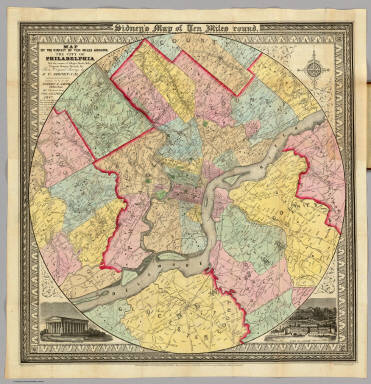
Image from: http://www.davidrumsey.com/maps492.html

1. Look as a map of the city, on google maps. Play with the street view. Find a public transit map. Know that while it will be very accurate, digital mapping has its weaknesses and even the all-mighty google will fail to show you everything perfectly. Also google the city's skyline, and look at the different images people have of the city. What do they think it's like? What's the general aesthetic, or the cliche?

2. Take a walk. A long one, through several blocks. Look at the buildings there and think about how they got to be that way--what style of architecture it is, what it tells you about the historical development of that neighborhood, whether it's residential or retail and why, what economic strata it's in, how long it's looked this way. Read the fliers posted on walls and streetlights and see what people in the area care about. Look at the graffiti.

3. When you're done, go look up the local neighborhood historical society, if there is one, and find out if you were right. Which houses were made in the 19th century? When did the park get put in? How long has the area been part of the city?

4. Scope out the coffee shops in your neighborhood. Notice what kind of people eat at which restaurants. Go to that place you never eat at and try and figure out why you haven't been before.

Image from: http://www.cynic.org.uk/holidays/nyc2002/

5. See the cliches, all of them, because there's a reason tourists do that, and actually read the historical displays next to them.

6. If this city is west of the first thirteen colonies, look up its plat map online (For example, Cook County i.e. Chicago). You might try and find a secondary source that explains the plat map too--the interesting part is in understanding the quirks of how the city was first laid out.

Westward expansion in the U.S. was highly regimented, contrary to popular belief. Land was divided up in grid patterns, often with the same exact rectangle set aside for the same purpose in many different cities. One of the earlier patterns in Ohio, for instance, always had the same numbered lot earmarked as a school. Land was sold in plats to private owners, who often later subdivided them for further profit. A lot about how the city later came to be shaped was dictated by these plat maps and by how their first owners decided to develop them.

Also, the insanity of many cities' street layouts can be explained by the fact that landowners could put in streets however they wanted--they didn't have to hook them up to everyone else's. It also helped that the grids were often laid down with scant regard for actual local topography, creating awkward patches and irregular corners where elevation, marsh, rivers, or other geographical features interfered.
 
Now, most eastern cities were just laid out ad hoc according to the needs of the colonists, but there are sometimes sites like Bostonography or archives of various universities that will still contain maps of all kinds of eastern cities in various stages and through various lenses throughout their history.


Image from: http://www.flickr.com/people/sarahhsia/

7. Pick a restaurant that serves a regional cuisine you rarely eat, and go to that neighborhood to eat it. For example, Chinatown, Divan, Little Italy, Germantown, whatever. Chicago is spoiled in this regard, but most cities have small ethnic enclaves like this--for instance the Ethiopian restaurants and stores in Washington D.C. Order something you don't recognize, or ask the waiter for a recommendation. Bonus points if you're entirely unsure how to eat it.

8. Look up the city government web page, and scan the constitution. Strong city council or strong mayor? Note that often the constitution's intent doesn't work out--in theory Chicago has a strong council and a weak mayor. In practice? Well.....yeah.

(Fun Chicago exercise--check the last names on political figures of the last century from ward captain up through state senator and see how many of the last names are the same. I have a haunting feeling this will be interesting for many other cities as well.)

8. Read the local paper. Where does the power lie politically, in the state legislature or the city government? The governor? Attorney general? A mayor or the majority party's leader? What issues is the city concerned about? Space? Garbage disposal? Crime? You won't get this from the government web page (well, maybe you will, but they can be hard to squeeze real meaning from if you don't already know a good bit about the city), but you will get this from newspapers, op eds, forums, and the comments section on articles. The Politics section of The Commercial Appeal is a good example for the city of Memphis. Like all papers, it has a slant, but the articles and comments beneath them still give a good snapshot of the city officials and citizens' relationship.

The example I gave was of a particularly mainstream local paper, but specialty papers--say for entertainment-only, or LGBTQ papers, or radical political papers--also have a lot to say, with more detail if less breadth.

Image from: http://www.flickr.com/people/swanksalot/

9. If there's a public transit system, pick a bus or train line and ride it from one end to another. If not, go for a long drive to nowhere in particular.

10. The census makes maps nowadays. The 2010 data is coming on a rolling basis, so more and more states are going to appear. In the meantime, these are based on samples from 2005-9. Or there's quick facts if you're not the visual type. Old census data can be interesting too, for the contrast it makes with the present (though I recognize people not inherently fascinated by history and demographic shifts might not want to wade through too much data. Still, having a quick glance can be enlightening if you want to know how the city's changed).

11. Your city, chances are, has a restaurant week, during which the swankiest places to eat in the city offer prix-fixe three course meals, that would normally cost a hundred dollars or more, for somewhere between twenty and thirty-five dollars. You might want to get a reservation in advance, but it will be well worth it. Most cities have a website or somewhere participating restaurants are listed, and it will give you a good idea of what food culture is like in the city. It will also be delicious without impoverishing you.

12. Go to museums. Not just the big natural history/art museum, though you should go to those too. Go to the Textile Museum, or the Audubon Museum, the Museum of Contemporary Photography, or the Fire Museum of Greater Chicago (I've never been to the latter, it's new, but only good can come of it). Little out-of-the-way places like that usually are dedicated to a local luminary, or manufacturing product, or are just about a subject that a small group of people in the area really cared about.

Image from: http://si.smugmug.com/gallery/1674201/1/121703751_wHHGg#121703751_wHHGg

13. Go drawing/painting/photographing in an area of the city. Don't let lack of artistic inclination stop you--it'll give you a new way of looking at where you are. While you're at it, look at other people's paintings/drawings/photos of the city. What does everyone's eyes seem drawn to?

14. While you're in an artsy mode, find the art galleries. Most cities have a district spotted with small, local art galleries. What's the scene like where you are? Bookstores are also often good for poetry readings, local authors giving talks, that kind of thing. Any universities/colleges nearby will also be full of odd little events, though inevitably they will be somewhat less local in character.

Thursday, January 13, 2011

Literary Journals

So! I'm in a Creative Fiction class and, in its own way, its redirected me to the theoretical purpose of this blog. As part of the class, since its purpose is to prepare us for publication as really real writers, we've been reviewing/presenting on literary journals. Now, as someone who has considered themselves a writer (albeit an extremely retiring one) for a very long time, it's something of a schande that I knew very little about the journals that were out there or how they work.

Still, everyone has to start somewhere and, since I'm doing it already, I thought I'd put up links to some random journals that a) are excellent b) are particularly wonky and c) are small/obscure/indie/interested/whatever enough that previously unpublished authors have a good shot at getting into them.

I also have a preference for journals that won't charge you a fee for reading your work, as I know everyone's broke, but some of the best ones do and there'll be a couple of them on the list too. Now, most of these journals also won't pay you, but those that put out print additions often send the author a complementary copy of the issue their piece appeared in.

Edit: I'm going to separate these into two sections, based broadly on distribution size and big deal-ness, so that some of the heavy hitters are on here too. Those in the Wonky section vary in size, but those in the Big section are 'you've made it kid' likely-to-be-carried-in-bookstores kind of publications.

Also, Duotrope.com is your friend. It has a huge database of journals, searchable by most things an author would care about, and gives you access to acceptance and response time statistics. It also lets you keep track of your impending submissions all in one place.


Wonky

Naturally, I must open this list with Bust Down The Door And Eat All The Chickens, a journal of absurd and surreal work. They like funny, they don't want surreal mistaken for fantasy, and they're not super into horror. You can download their issues for free from their website, and you should.

Next is 5x5 a journal that is, when in print, five inches by five inches. They took the name from radio jargon meaning "the signal had excellent strength and perfect clarity", and that's their literary mission statement. They take everything--poetry, fiction, non-fiction, comics, art--and they have themes for each issue posted on their website. They encourage high schoolers and the under-eighteen crowd to submit, so it's a great place for precious writers to use as a springboard.

BAP Quarterly is a little less off-beat than the first two, but I like what I've seen of it so far. It also has a different theme each issue and accepts fiction, non-fiction, poetry, and photography. It's in a more conventional journal format, slickly presented, and it's also available for free online.

Cafe Irreal is another surreal (or irreal, I suppose, they have a lengthy section defining that) journal, perhaps a little more reflective, refined, and mellow than Chickens. It also gets submissions from previously published authors sometimes and, of all things, pays the author actual money for first-publish internet rights, so that's good.

 Not gonna lie, Booth Journal is on this list entirely because What They Did With The Body was such a bizarre, excellent, upsetting story. All their stories are that well-chosen though, as far as I can see. Also, the editors' tone is endearingly offbeat in a way that doesn't fill me with rage at hipsters. They take poetry, fiction, nonfiction, comics, and lists and are more excited about the last three because they get less of them. Personally, I'm really pleased by the idea of submitting lists, as grouping information is oddly interesting and aesthetically cool. Some of their lists are pretty great.

Weird Tales  is taking up the mantle of the original Weird Tales, that was founded in the 1920s and gave Lovecraft his start. They publish weird, speculative, alt fiction, poetry, and one-minute videos that are "sort of a funky hybrid of a movie trailer, a Zen koan, and an Adult Swim between-show bumper". They pay you 5 cents a word for fiction and twenty dollars a poem. They also have a section called Weird Sightings, where they put up strange or amusing things related to Lovecraft.

The Liar's League is awesome. They take flash fiction and short stories (800-2000 words) and have actors read them aloud regularly at performances. Now, they're based in London, so a lot of us *cough* can't go watch, but they upload recordings to their website and to iTunes.

365 Tomorrows is not actually journal-level stuff, but it is kind of fun and a good place to experiment. It's a science fiction flash fiction site, where one incredibly short story goes up on the front page per day. That means there's lots of chances to get in, and on a separate note it's a great place for a reader to get a quick and often-bizarre sci-fi fix. On a totally self-promoting note, this one time I had a story in it and was really pleased with myself.

The Kunlun Journal of Chinese Historical Fiction  is a fledgling journal, but I love highly specific niche publications, especially when that niche is wuxia. And there aren't enough historical fiction journals out there.

So I'm also going to include Lacuna, a historical fiction journal of discerning taste that takes work set in all time periods and locations, and Alt Hist, an alternate history journal--because really, not enough people love alternate histories. 


Big

Glimmer Train actually charges a reading fee for stories you submit and has a wider circulation than the stuff in the previous section. It takes stories from published and unpublished writers alike, and tends to be a pretty good spot to get noticed by an agent from. That said, it also treats its authors very well, gives them a lot of attention, has regular competitions with substantial prizes, and has a pretty classy format. The journal is also not available online/free and don't take novels, poetry, or kids' stories. They like stories that focus on the human element, and emotional significance. Also--someone in my class totally just got a story accepted into their most recent issue. There was no point to telling you except that it was awesome.

Tin House  has themed issues, accepts submissions from September 1 to May 31, and publishes in a really nice paperback format that's carried by a lot of bookstores. They have a hard 10,000 word limit on stories and take up to five poems at a time. They also include a crossword, restaurant and book reviews, and other magazine features in their issues. The published well-known authors next to unpublished ones, and are committed to include at least one unpublished author in each issue.

McSweeney's Quarterly  is avante garde! Off-beat! Very well known! And very hard to get into. They publish books as well and have a whole host of literary things associated with them. They publish authors you wouldn't expect, like David Byrne from the Talking Heads, the the whole thing is Dave Eggers' ("A Heartbreaking Work of Staggering Genius") brainchild. Their response time, however, is one of the worst in the business, sometimes taking an entire year.

The New Yorker really needs no introduction and it's included for completeness' sake, but it's kind of at the apex of journals and you've pretty well made it if you get accepted here. It was basically my childhood.

Clarksworld Magazine  is one of the speculative fiction (scifi and fantasy) heavy-hitters. Hard to get into, pays at professional rates, and accepts fiction with 1,000 to 8,000 words, though it prefers them to be right in the middle. They have a fairly exhaustive list of pet-peeves in their submission section, most of which are quite reasonable, that are worth checking out before you submit.

Sunday, August 8, 2010

So hi.

The theory of this blog, at the moment, is to make a research resource archive (tongue twister) targeted vaguely towards college and up and to give us a forum to kick around ideas.

"We" are three undergraduates studying American history, math (computability theory and reverse math), and neuroscience with a minor in computer science. So there should be a wide variety of topics floating around.

So, I'm vaguely obsessed with video/oral-history right now, partly due to work. My focus in history is mostly on urban history, particularly Chicago. There's a lot of great material in film and video on Chicago, most of it very underrated.  Below are a couple of sites I've been hanging out on a lot lately and would recommend, particularly since they have a lot of information that would still be useful for broader research.


The HistoryMakers
An Chicago-based oral history archive composed of interviews with African Americas from around the country. It's broken up by categories (ScienceMaker, LawMaker, that kind of thing).

You have to register to use the site, because it's still in a testing phase, but they don't email you about it and you only have to answer a couple of questions about why you're interested. They have a lot more material online in written biographies than they do in interviews, but there's a lot more information in the interviews. What you see is what you get with this site, as they haven't yet opened up their physical archive yet.

The HistoryMakers


MediaBurn
So in the late 1960s the advent of portable video cameras sparked a movement of independent video makers in Chicago. Many of them were politically motivated, though a lot were also just about aesthetic creativity. MediaBurn is an archive of video clips made during that time, almost all by independent artists.

Incidentally, the site took its name from a counterculture event in which a guy drove a burning Cadillac through a mountain of televisions, a clip that is well worth watching. MediaBurn is run by a bunch of former members of the indie video movement, so it's very well-cared for. Chicago was having an interesting time, to say the least, during this period, and MediaBurn has some pretty unique information about that time.

MediaBurn

StoryCorps

StoryCorps is an interesting one--it's an oral history project that's basically open to anyone who wants to record a clip. It's based around two people who are close, say father and son or two best friends, doing an interview with each other. They give people who do the interviews a CD of it and broadcast segments on NPR as well as posting a lot of them on the site.

The clips tend to be short, and they range from  poignant human-interest stuff to pretty historically interesting recollections, such as one man's witnessing of the Stonewall riot.

StoryCorps

National Visionary Leadership Project

It's not quite as thorough or wide in scope as The HistoryMakers, but it's similar in a lot of ways. They also have some content the HMs don't.

The Visionary Project